Condensation Drips
Warm, damp air meets cold steel and drips on the floor even when the roof is tight. Foam on the outside keeps the panel warmer and stops the drip.

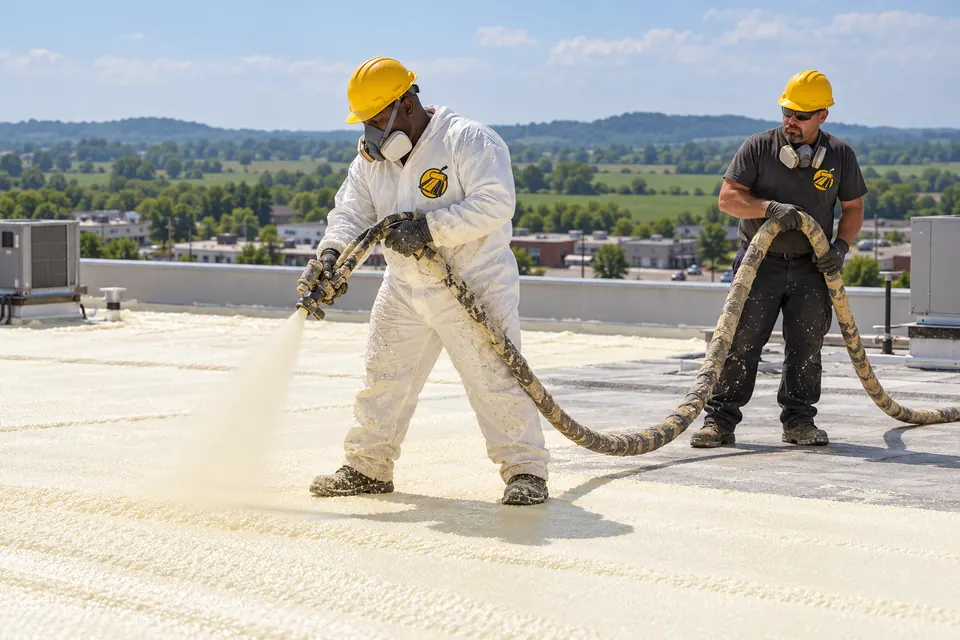
Foam Over Steel Panels
We install spray foam roofing in Winchester over metal panels that drip condensation, lose heat, or trap water in the ribs, then coat the foam to protect it.
Foam earns its cost when the building needs insulation or the ribs keep trapping water.
| Check | Foam Fits | Fix First | Coat The Panels |
|---|---|---|---|
| Inside the building | Condensation drips from the panels | Wet insulation to dry or remove | Dry, insulated space below |
| Panel profile | Deep ribs that trap water and debris | Crushed ribs or holed sheets | Firm ribs that drain |
| Heat and cold | Heat escaping through bare steel | Gaps at the eaves and ridge | Insulation already in good shape |
| Room around the building | Space to mask intakes and stage the rig | Vehicles parked tight to the walls | No way to control overspray |
These are the conditions that make foam worth the extra setup over a plain coat.
Warm, damp air meets cold steel and drips on the floor even when the roof is tight. Foam on the outside keeps the panel warmer and stops the drip.
A shop with little or no insulation loses heat through every panel. Closed-cell foam adds about R-6 per inch once aged.
Deep panel profiles trap leaves and water between the ribs. Foam fills the profile and leaves one continuous surface to coat.
Rooftop units pull air from right where the foam is sprayed. Intakes get shielded during spraying so odor stays out of the building.
Overspray travels on wind, toward cars and inventory near the walls. Spraying waits for calmer conditions, and nearby items get covered.
Sunlight breaks down exposed foam. The topcoat goes on within the window the foam maker sets, before damage starts.
Foam roofs in Winchester end with one of these topcoat plans, or skip foam for a plain coat.
Low runs that still hold some water after foaming take silicone over the foam.
Steeper, well-drained foam surfaces in full sun can take acrylic, which recoats easily with more acrylic.
Foam can be shaped to add slope in small areas, steering water away from rooftop curbs before the topcoat.
Firm, insulated buildings that only leak at screws and laps take a metal roof coating instead.
Foam plus a topcoat over the old steel helps the owner, the person running the building, and the people working under it.
Not sure if the drip is a leak or condensation? Call and tell us when it shows up: during rain or on cold mornings.
Call UsHave the roof size handy? Get a ballpark range for foam and a topcoat over your steel.
Get A Free Ballpark EstimateFoam takes more setup than a rolled coat, with masking, wind checks, and a topcoat deadline.
We check the panels, laps, and screws from above and the insulation from below, sorting rain leaks from condensation.
Holed sheets and loose screws get fixed, and the panels are washed so the foam bonds to clean, dry metal.
Intakes get shielded, nearby vehicles and inventory get covered, and the rig and lift are staged where they block the least.
Closed-cell foam fills the ribs and builds to the planned thickness, with crickets shaped behind rooftop units where needed.
The topcoat goes on inside the window the foam maker sets, and a final walk checks thickness and coverage.
Foam roofs share a lot with these services.
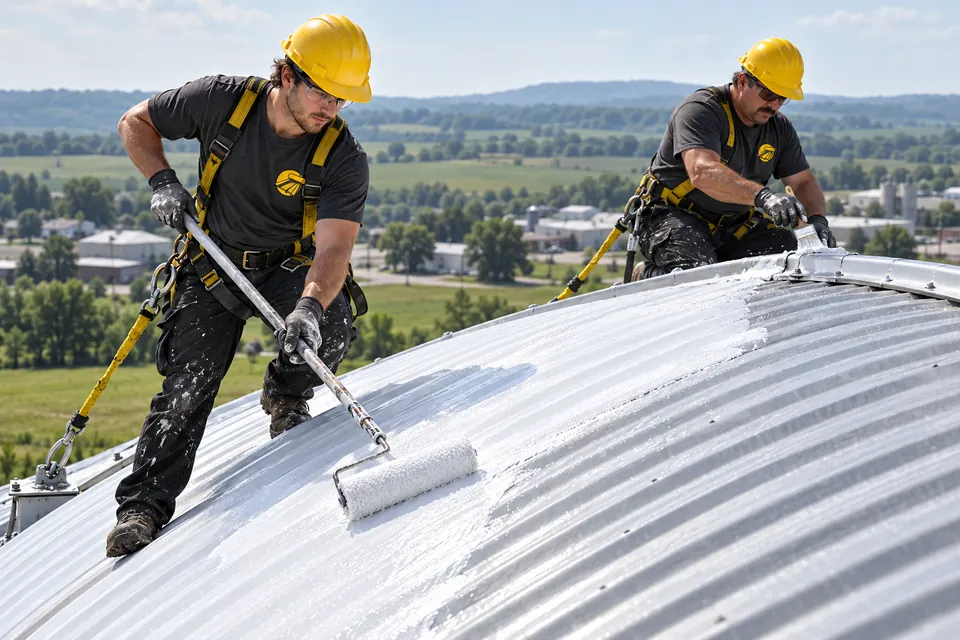
Insulated buildings that only leak at screws and laps take a plain metal coat.
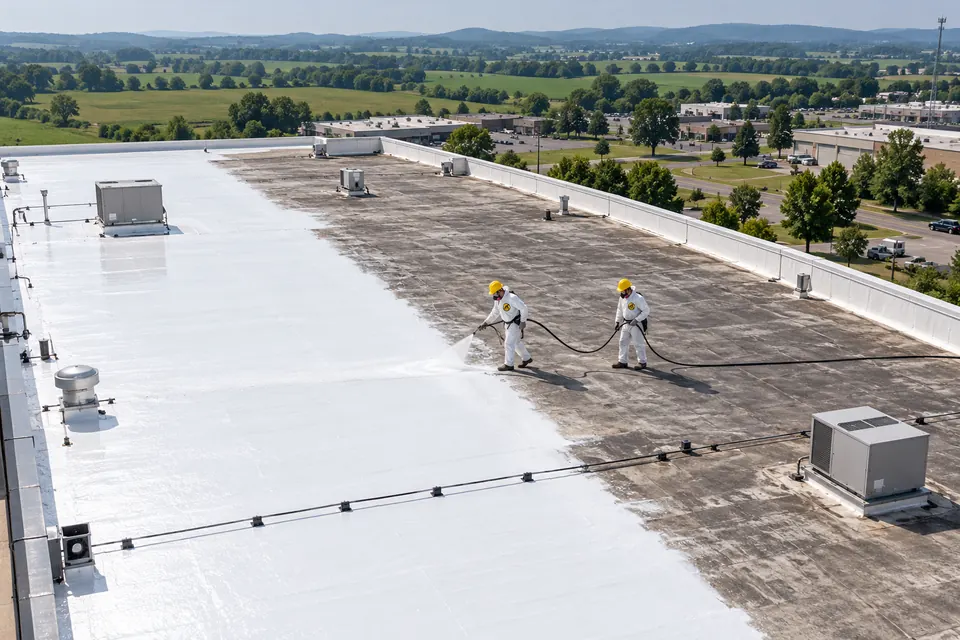
Silicone is a common topcoat over foam on low runs.
It pays off when a metal building needs insulation, drips condensation, or has ribs that trap water and debris. The foam fills the ribs and makes one continuous surface that then gets coated.
A DOE Building America guide puts aged closed-cell foam near R-6 per inch. Firm, insulated buildings usually need only a coating.
Coating type, film thickness, temperature, and humidity set it, and each product data sheet lists its own windows.
Foam has its own deadline: the topcoat goes on within the window its maker sets, because sunlight breaks down an exposed foam surface. Dew on the panels at dawn can hold off the first pass.
Programs change often, so ask your electric provider about current business programs before counting on one. Kentucky Utilities customers can review the LG&E and KU business programs, where insulation appears among eligible custom measures.
Co-op members should ask their own cooperative, and ask about pre-approval before any foam is sprayed.
Some, and still modest. Closed-cell foam weighs more than a coating alone, which is very light, but far less than new panels or a built-up roof.
The inspection confirms the purlins and framing are straight and firm before any foam goes on.
Intakes on rooftop units get shielded while foam is sprayed, so odor stays out of the building. Vehicles and inventory near the walls get covered if overspray could reach them.
Spray days also wait for calmer wind, which is part of why foam takes more setup than a rolled coat.
Enter the roof size for a ballpark foam and topcoat range, or call to talk through the drips.
Or call (859) 204-8099
Leave a name and number and we will call you about the roof.
Rather talk now? Call (859) 204-8099