Puddles By The Gutter
Water sitting along the eave on low steel usually means packed debris or a gutter pulled away from the edge. We clean and refasten it, then silicone covers the wet zone.

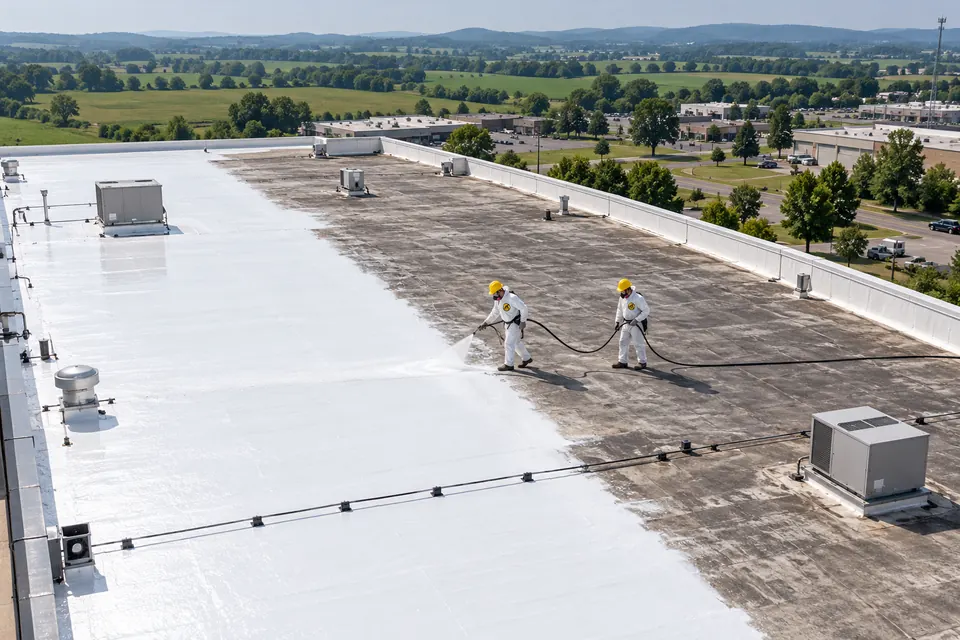
Low-Slope Metal · Clark County
We apply silicone roof coating in Winchester to low-slope metal roofs that hold water near gutters, curbs, and valleys, after finding out why the water sits.
Silicone earns its place where water lingers. These rows show when it fits and when another coat makes more sense.
| Check | Silicone Fits | Fix First | Pick Another Coat |
|---|---|---|---|
| After a rain | Puddles near gutters or curbs | A bay sagging between frames | Dry within hours on a steep slope |
| Slope | Low-slope steel runs | Crushed ribs holding water | Steep, well-drained panels in full sun |
| Recoat plans | Silicone again later | Old acrylic layers peeling | Plans to recoat with acrylic |
| Dust on the roof | Rinsed off by rain or a wash | Debris packed in the valleys | A dusty yard where a clean look matters |
These conditions point toward silicone. Each one gets its cause fixed before the coat.
Water sitting along the eave on low steel usually means packed debris or a gutter pulled away from the edge. We clean and refasten it, then silicone covers the wet zone.
Curbs block the flow on a low run, so water collects on the uphill side. A small cricket behind the unit steers it toward the eaves before coating.
Leaves and grit pack into valleys and dam the water behind them. Cleared valleys get rust treatment and reinforced coating along both edges.
Low-slope end laps pull water uphill between sheets. Each one is scrubbed, dried, and bridged with fabric before silicone goes over the field.
A dip between frames that holds water after every storm is a framing problem. That framing gets repaired first, or the water stays put under any coat.
Loose acrylic from an earlier job gets scraped back to a firm edge. An adhesion test shows which primer lets silicone grip what stays.
Silicone pairs with other work on many Winchester roofs. These are the combinations we see most.
Rusted laps and screw lines get primer, then silicone covers the whole low run, including the wet zones by gutters.
Foam fills the ribs and can be shaped to add slope in small areas, and silicone protects it from sunlight.
Buildings with a steep main roof and a low lean-to can take acrylic up top and silicone below.
Some roofs need the screws and laps sealed this season and the field coated next, when budget or weather says wait.
Silicone over a low metal roof pays off in different ways for the people who own, run, and use the building.
Water coming through near a rooftop unit or along the eave? Call and tell us which side of the building it shows up on.
Call UsKnow roughly how big the low runs are? Get a ballpark range before anyone climbs a ladder.
Get A Free Ballpark EstimateFinding out why water sits comes before any silicone, because a coat cannot lift a sagging bay.
We look at the roof after a rain when we can, marking every spot that still holds water and checking the framing under each one from inside.
Packed debris gets cleared, crushed ribs get repaired, and crickets go in behind units so the water has a path to the eaves.
A wash takes off dirt and chalk. Rusted laps and screw lines get primer, and adhesion patches confirm what each area needs.
Side laps, end laps, and curb seams get fabric-reinforced coating so the silicone has a continuous base.
The field is coated to the specified thickness, with extra attention on the wet zones, and a closing walk measures the film.
These services often share a roof with silicone.
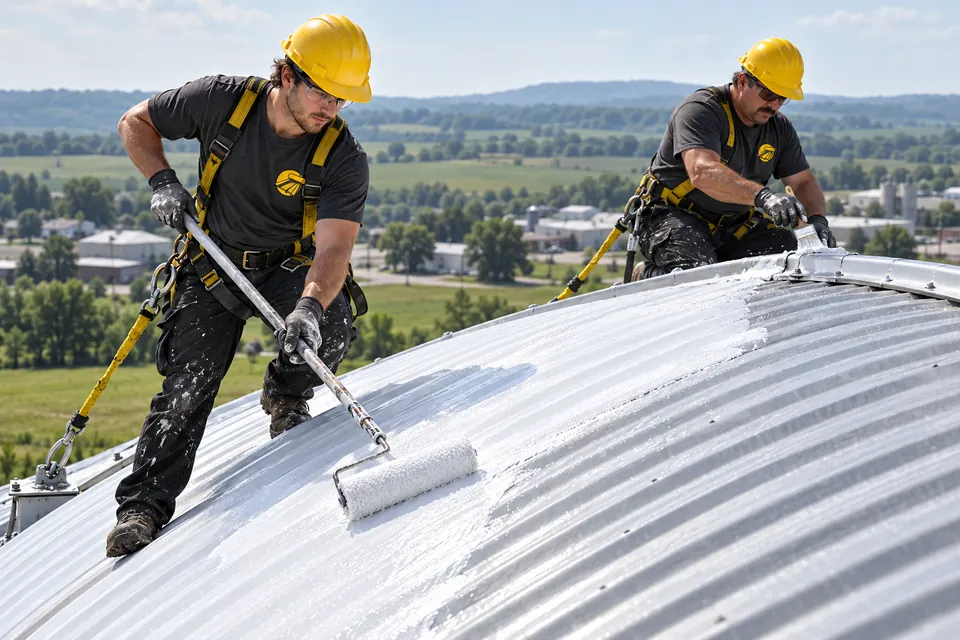
Fastener and lap repair comes before silicone on every metal job.
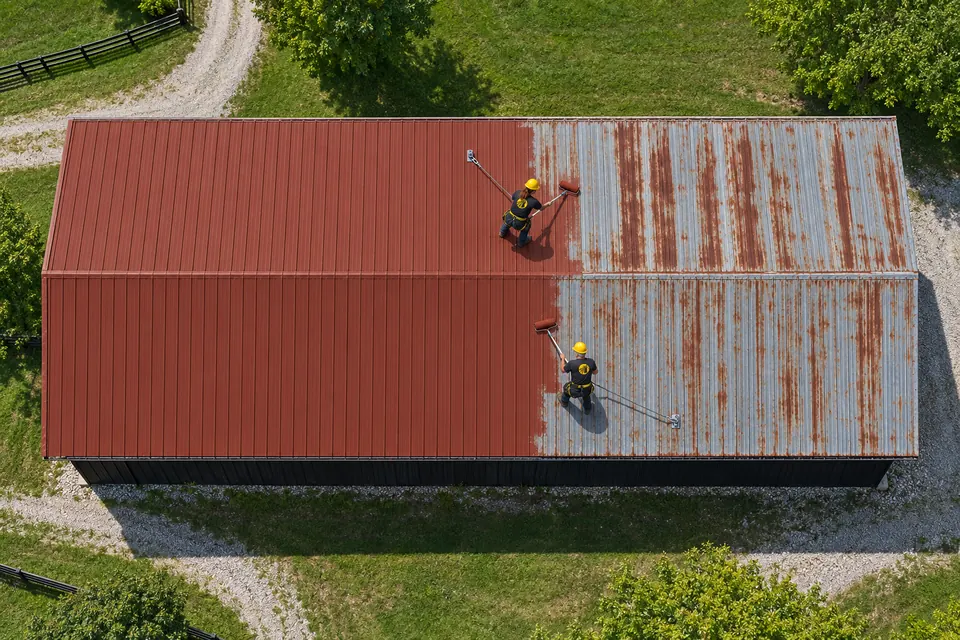
Steeper, sunny sections of the same building often get acrylic instead.
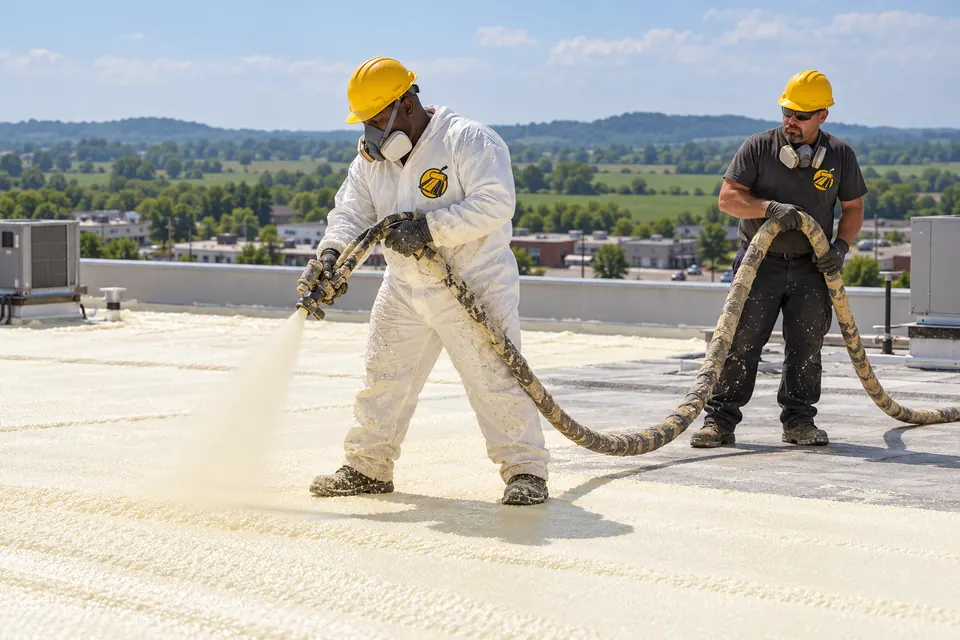
Foam adds insulation and can build slope in small low areas before a silicone topcoat.
Every lap is scrubbed, dried, and bridged with fabric-reinforced coating or a compatible seam tape before the field coat. Overlaps are where wind-driven rain and capillary action pull water uphill.
Long, low runs get the most attention, since grit and moisture collect under the upper panel and rust starts there.
Drainage, recoat plans, and budget decide it. Silicone handles standing water and damper application days; acrylic suits steeper, well-drained steel and stays cleaner on slopes.
Only silicone bonds well to silicone later, while acrylic recoats bond readily. Compare product data sheets side by side before choosing.
Silicone is the usual pick for low spots near gutters, behind curbs, or along a valley. The cause gets found first, since ponding on metal often traces to a sagging purlin, a crushed rib, or packed debris.
Crickets behind rooftop units steer water toward the eaves, and a sagging bay gets its framing fixed before coating.
Mid-spring into early fall gives the steadiest coating weather around Winchester, when nights stay above most data-sheet minimums and panels dry early. Fall work wraps up before frost lingers on the steel.
Silicone stretches that season somewhat because it cures with humidity, and prep like fastener replacement can start sooner.
Yes, with more silicone. Only silicone bonds well to an existing silicone coat, so the first choice sets the recoat path for the life of the roof.
Before a recoat, the surface gets washed of the dust it has collected, and thin or torn spots get repaired so the new layer bonds evenly.
Enter the roof size and condition for a ballpark, or call and describe where the water stands.
Or call (859) 204-8099
Leave a name and number and we will call you about the roof.
Rather talk now? Call (859) 204-8099