Curling Tabs
Tabs that cup or curl at the edges have lost their flexibility. A coating cannot flatten them, so curled areas point toward replacement.

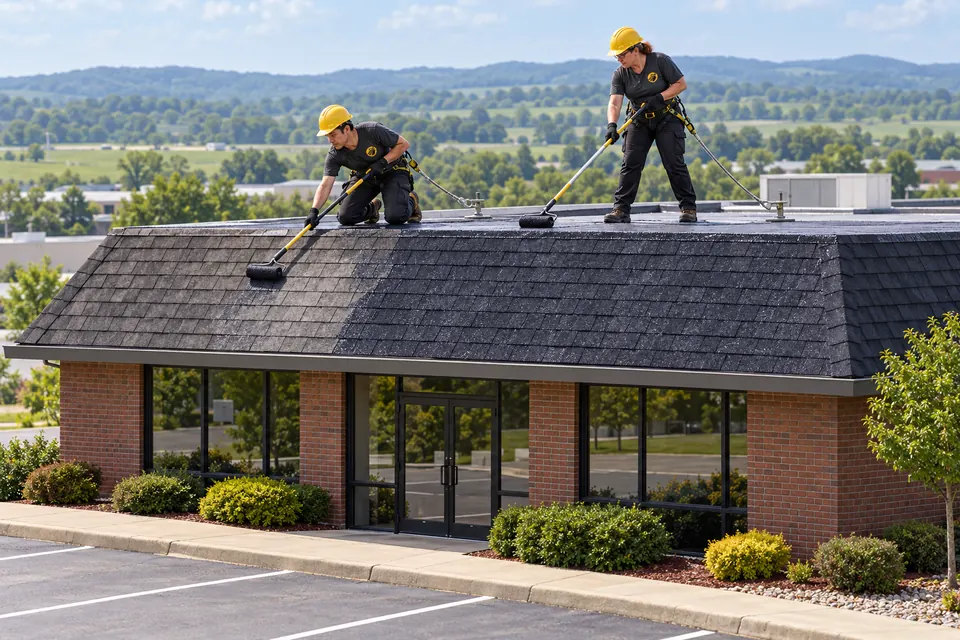
Commercial Asphalt Shingle Roofs
We coat commercial asphalt shingle roofs in Winchester on strip centers, offices, and churches when the shingles still lie flat and hold their granules.
The gate is narrow on purpose. A shingle roof that fails it gets an honest replacement call.
| Check | Coat It | Fix First | Replace Instead |
|---|---|---|---|
| Shingle shape | Flat and well adhered | A few lifted tabs | Curled or cupped across the slope |
| Granules | Most still on the shingle | Thin patches near valleys | Bald shingles over large areas |
| Decking underfoot | Firm everywhere | One soft spot by a vent | Soft decking across sections |
| Maker terms | Allow a coating | Unclear and need reading | Coverage would be lost |
Six things decide whether a commercial shingle roof gets coated or replaced.
Tabs that cup or curl at the edges have lost their flexibility. A coating cannot flatten them, so curled areas point toward replacement.
Granules shield the asphalt from sun. Bald spots near valleys and downspouts show where the shingle is wearing fastest.
A spongy feel underfoot means wet or failing decking. That gets found on a close walk before any coating is planned.
Valleys carry the most water on a shingle roof and wear first. Their condition often decides the whole roof.
Pipe boots split in the sun and leak at the base. New boots go in before a coating covers the field.
Many Winchester buildings pair a shingled front with a metal or low-slope rear. Each area gets matched to its own system.
Shingle buildings here usually end up on one of these paths after the walk.
Shingles that pass both checks get cleaned, detail-sealed at vents and valleys, and coated.
A steel back section gets screw and lap work and its own coat, separate from the shingled front.
Low-slope additions behind a shingled front often hold water and take silicone.
Curled, brittle, or bald shingles are past where a coating helps, and we say so plainly.
On a shingle roof that passes the gate, a coating helps each person tied to the building differently.
Seeing a stain near a vent or below a valley? Call and tell us which room it shows up in.
Call UsKnow about how big the shingled area is? Get a free estimate request started in a few minutes.
Get A Free EstimateShingle coating starts with a gate. If the roof passes, the work follows these steps.
We walk the shingles closely for curling, granule loss, and soft decking, and check stains inside under valleys and vents.
Certain shingle brands limit what can go over their product, so the existing coverage terms get read before any plan.
Cracked vent boots get replaced, lifted tabs get sealed down, and worn flashings get repaired.
Loose granules and dirt come off so the coating bonds to the shingle surface itself.
The coating goes on in dry, mild weather, and a final walk checks coverage at valleys, vents, and edges.
Buildings with shingles often have other roof sections too.
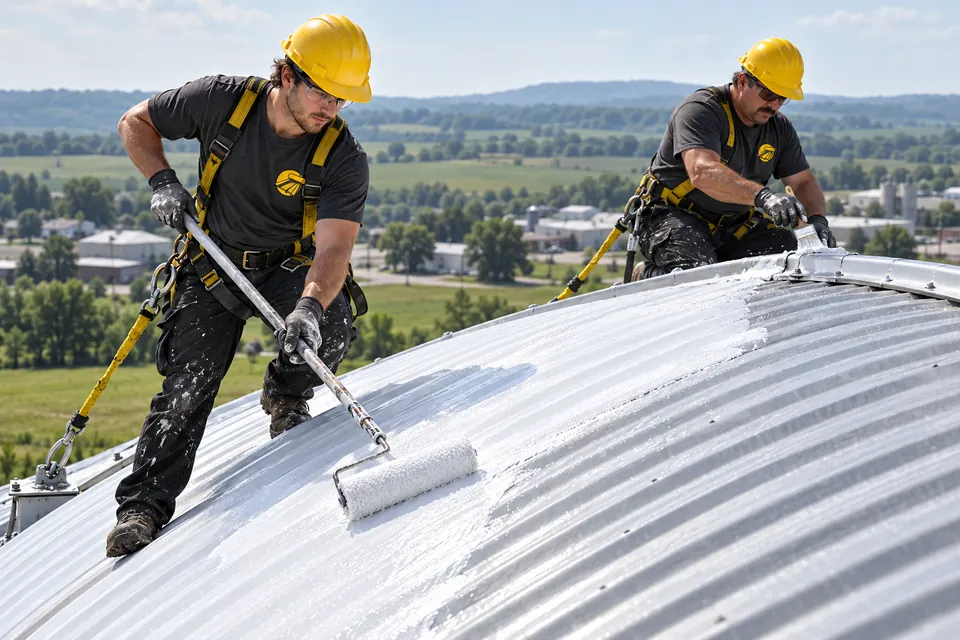
Steel back sections get their own screw, lap, and coating work.
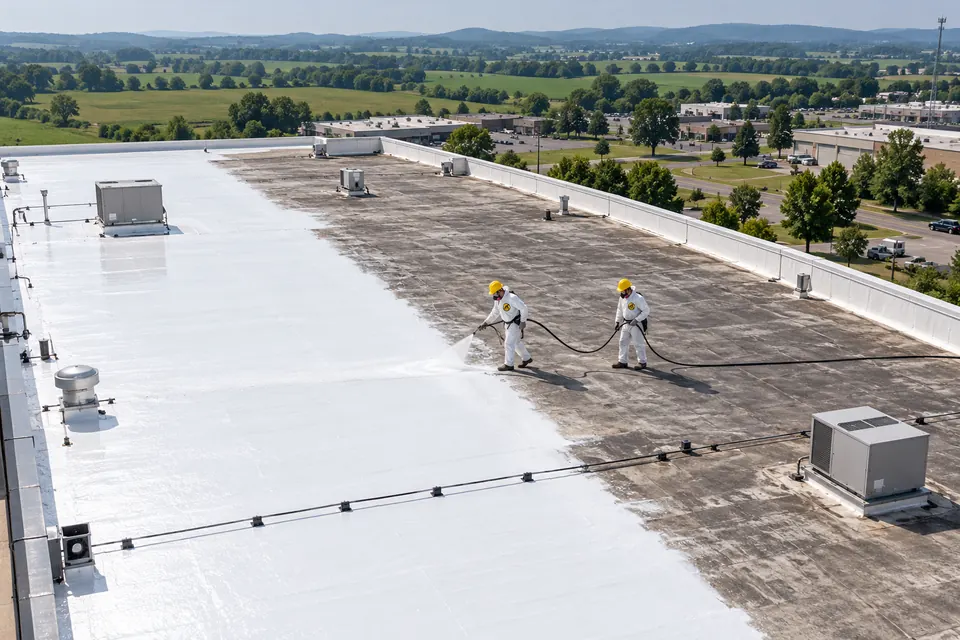
Low additions that hold water take silicone.
They work on commercial asphalt shingle roofs whose shingles lie flat, stay well adhered, and are mostly intact, such as on a strip center, office, or church. Curled, brittle, or bald shingles are past where a coating helps.
Two checks come first: the shingle maker's terms and a close walk for granule loss, cupping, and soft decking.
Zoning and floodplain offices usually get involved only when roof work changes the building, such as raising a roof line, adding curbs, or moving equipment. A recoat over existing panels rarely touches zoning.
Some cities keep planning and zoning separate from building permits, so ask about floodplain status for buildings near creeks.
No. Curling means the shingle has lost its flexibility, and a coating sits on top without changing its shape. Curled areas go on the replacement list.
A roof with a few lifted tabs is different: those get sealed down during prep and the rest can be coated.
Each roof section gets its own plan. A shingled front facing the street and a metal or low-slope rear are common here, and they take different systems.
The steel section gets screw and lap work and a metal coating, and a low addition that holds water can take silicone.
Firmness is the main check. A spongy step points to wet or failing decking, usually near vents, valleys, or long-running leaks.
Soft spots get investigated from inside where possible, and widespread soft decking means replacement instead of a coating.
Valleys get repaired first, since they carry the most water and wear fastest. Once the valley shingles and flashing are repaired, the coating adds a protective layer over them.
Valleys that are worn out across their length point toward replacement.
Start an estimate request with the roof size, or call and tell us what the shingles look like.
Or call (859) 204-8099
Leave a name and number and we will call you about the roof.
Rather talk now? Call (859) 204-8099