Backed-Out Screws
Heat cycles walk screws out of the purlins a little at a time. A raised head opens a gap at the washer, and water follows the threads to the insulation below.

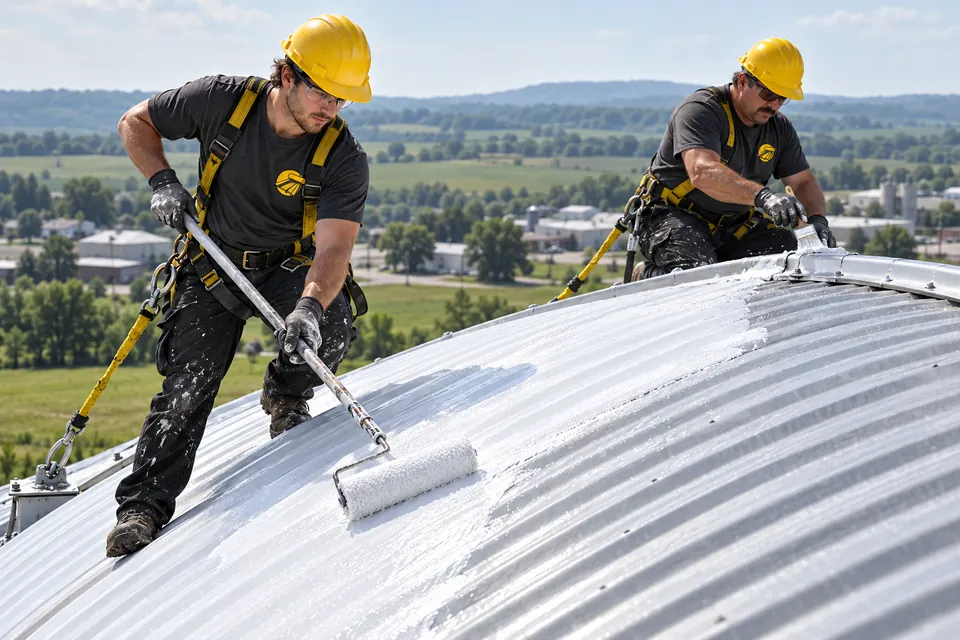
R-Panel And Standing Seam · Winchester, KY
Our commercial metal roof coating in Winchester and Clark County starts with the screws, laps, and rust behind most leaks on R-panel and standing seam.
Four columns, one roof. Most buildings land in two of them at once.
| Check | Coat It | Fix First | Replace Instead |
|---|---|---|---|
| Panel profile | Exposed-fastener R-panel or standing seam | Mixed profiles from past re-panels | Corrugated sheets rusted thin |
| Old patches | A few mastic dabs at screws | Layers of tar over laps | Patches covering most of the field |
| Rust at laps | Surface bloom on firm steel | Flaking at lower end laps | Holes along every end lap |
| Standing seam clips | Seams still free to slide | Seam ends lifted or unsealed | Clips torn loose by wind |
| Under the deck | Dry insulation, no stains | A few stains under laps | Wet, sagging insulation across bays |
Each of these gets repaired during prep, so the coating goes over a closed, firm surface.
Heat cycles walk screws out of the purlins a little at a time. A raised head opens a gap at the washer, and water follows the threads to the insulation below.
Moisture trapped under the upper sheet rusts the panel beneath it first. Flaking steel gets scraped to firm metal and primed before the lap is built up.
Side laps held by too few stitch screws open up in wind. New stitch screws pull the lap tight so fabric and coating can bridge it.
Caps lose their closures and stitch screws over time, letting blown rain under the ridge. They get refastened and sealed before any field coat.
Built-in and hung gutters rust at their joints and back water under the eave trim. They are cleaned, rust-treated, and coated where the system allows.
Rubber boots around vent stacks crack in the sun and freeze. Old boots get replaced and the flashing worked into the coating with reinforcement.
Metal roofs here take one of four paths once the screws and laps are sorted.
Low runs that hold water by gutters or behind curbs take silicone, which tolerates standing water and cures in damper weather.
Sloped, well-drained panels in full sun take acrylic, which stays cleaner on a slope and recoats easily with more acrylic.
Closed-cell foam fills the ribs and adds insulation when a shop drips condensation or loses heat, and a coating protects it.
Holed or crushed sheets in one area get replaced, and the whole roof is coated together so old and new steel match.
Coating the steel already in place changes something different for each person tied to the building.
Drips lining up under one row of screws? Call and tell us the bay and the row where it lands.
Call UsHave the square footage and a rough idea of the rust? Get a ballpark range for coating the steel.
Get A Free Ballpark EstimateFastener and lap work takes longer than spraying the field, so most of a metal job happens before the coat.
We walk each screw row and lap, then check the deck from inside so every ceiling stain gets traced to a spot on the roof above it.
Backed-out screws get snugged or upsized, stripped holes take oversized fasteners, and holed sheets get a patch plate or a new panel.
A wash takes off chalk and loose rust. Rusted laps and screw lines get rust-inhibiting primer, and galvanized steel gets a galvanized-rated primer.
Side laps, end laps, curbs, and ridge caps get fabric-reinforced coating or seam tape so the field coat has a continuous base to bridge.
The field goes on in passes to the specified film thickness, and a final walk measures it before the lift comes down.
These systems go over metal too when the roof calls for them.
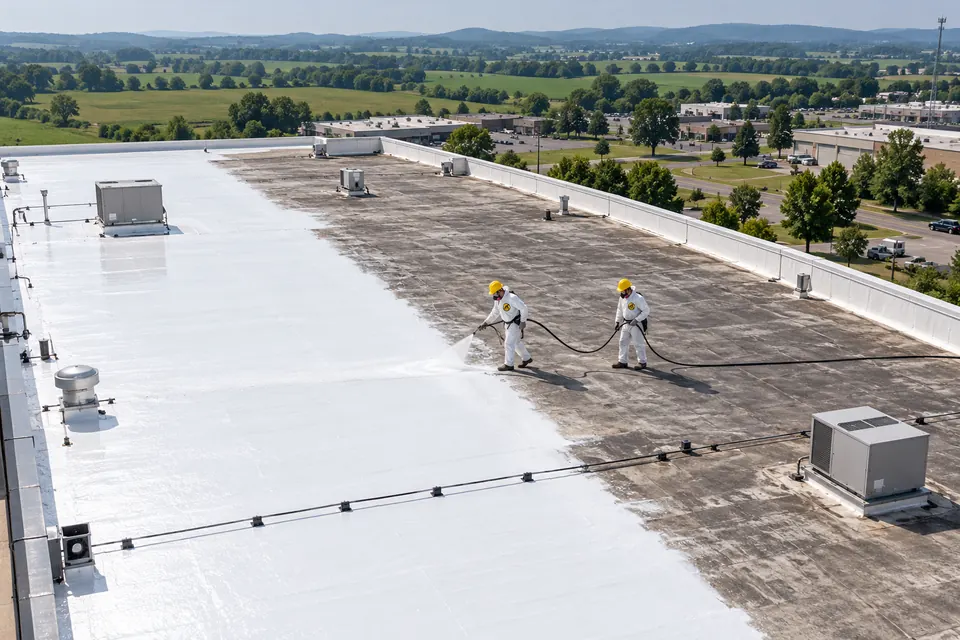
Pick silicone when water stands near gutters or behind curbs on low steel runs.
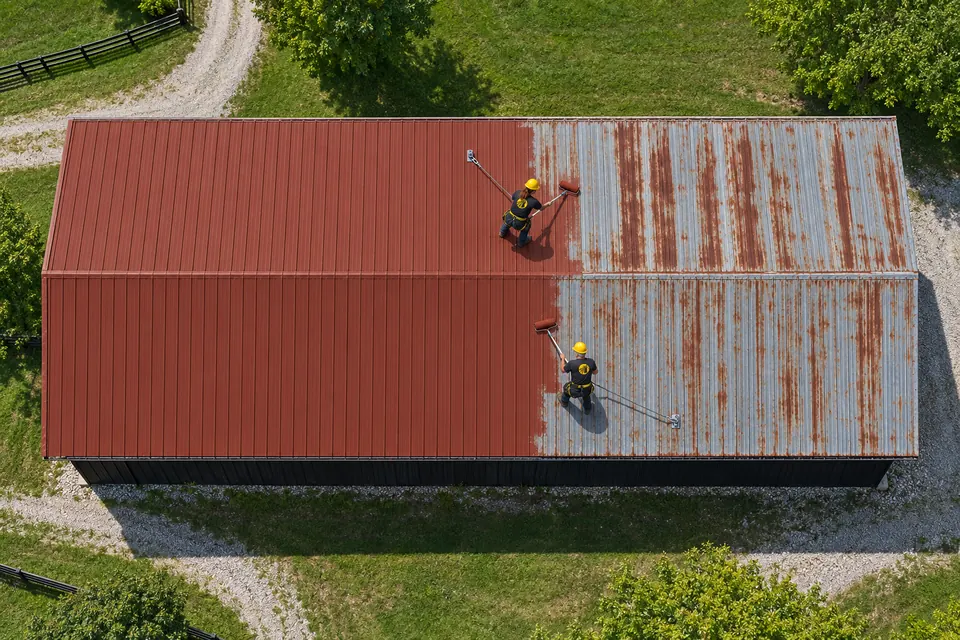
Acrylic suits steeper panels that drain fast and sit in full sun.
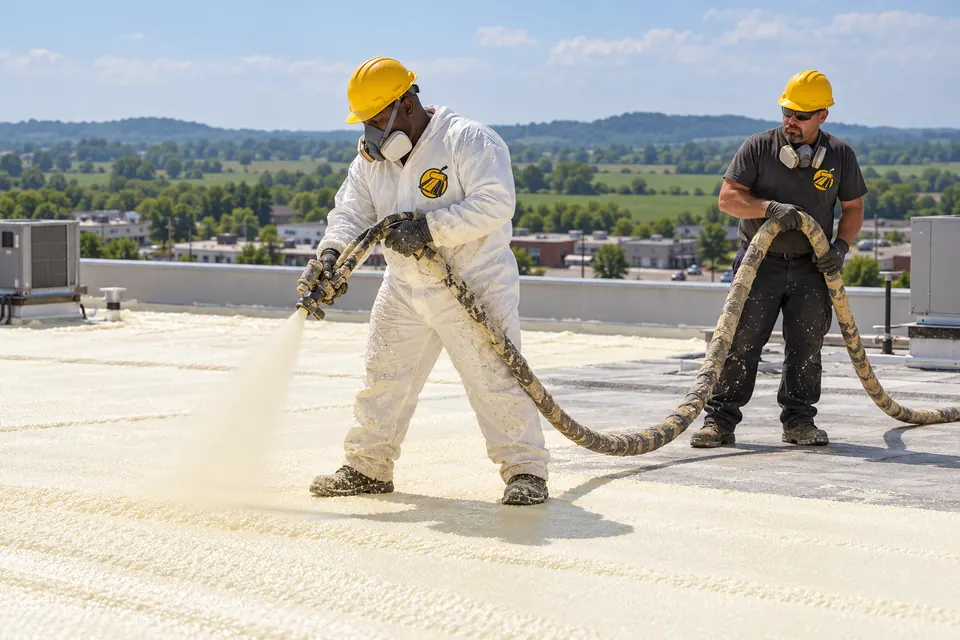
Foam over the panels adds insulation where a shop drips condensation.
Warehouses, machine shops, churches, retail strips, and farm steel buildings all qualify when the panels are still solid. Firm footing near the purlins, surface-only rust, and enough slope to shed water mark a good candidate.
Widespread rust-through, crushed ribs, or shifted purlins call for structural repair or new panels first.
Surface rust is fine once it is cleaned and primed. Steel with holes needs a patch plate or a new panel first, because a coating covers metal and cannot replace metal that is gone.
Check the lower end laps and the ground around screw holes first, where water sits longest.
Each screw seals through a neoprene washer that hardens, splits, and lets water follow the shank inside. Panel movement backs screws out over time too.
During prep, loose screws get snugged or upsized, missing ones replaced, and every finished head capped with compatible sealant or reinforced coating.
Yes. Each gets its own repair first, since these parts flex and weather on a different schedule than the steel field.
Cracked fiberglass panels get replaced or covered, loose ridge caps refastened, and gutters cleaned and rust-treated. Curbs and pipe flashings take reinforced coating at every seam.
Winchester's Building Inspections department handles permits for structures of 200 square feet or larger in the city and across Clark County, so a warehouse in town and a steel building on a county road follow the same path.
For coating-only work, call that office first and ask whether a permit applies.
Share the roof size and condition for a ballpark coating range, or call with the bay where it drips.
Or call (859) 204-8099
Leave a name and number and we will call you about the roof.
Rather talk now? Call (859) 204-8099