Metal Roof Coating
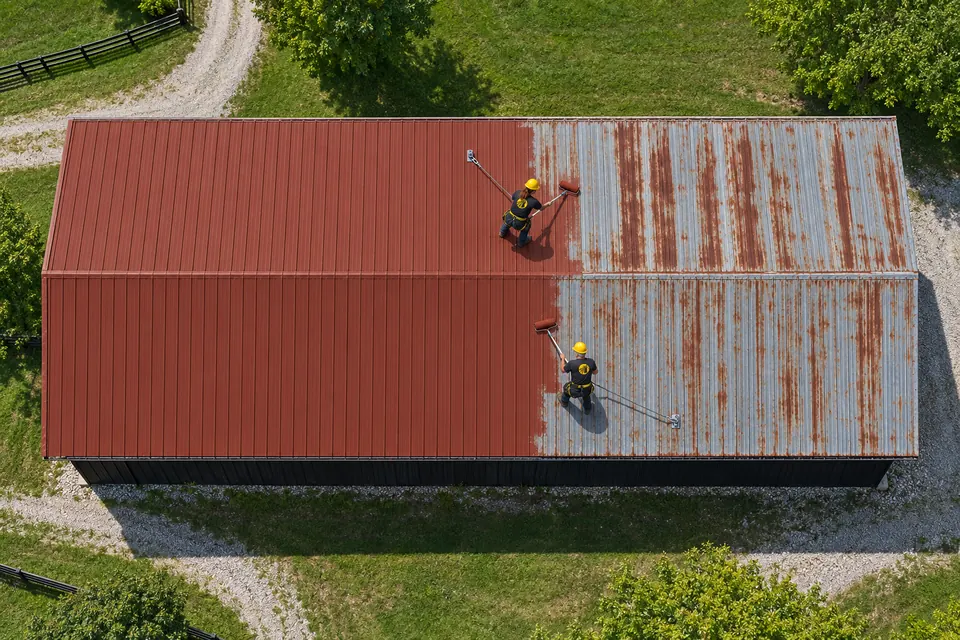
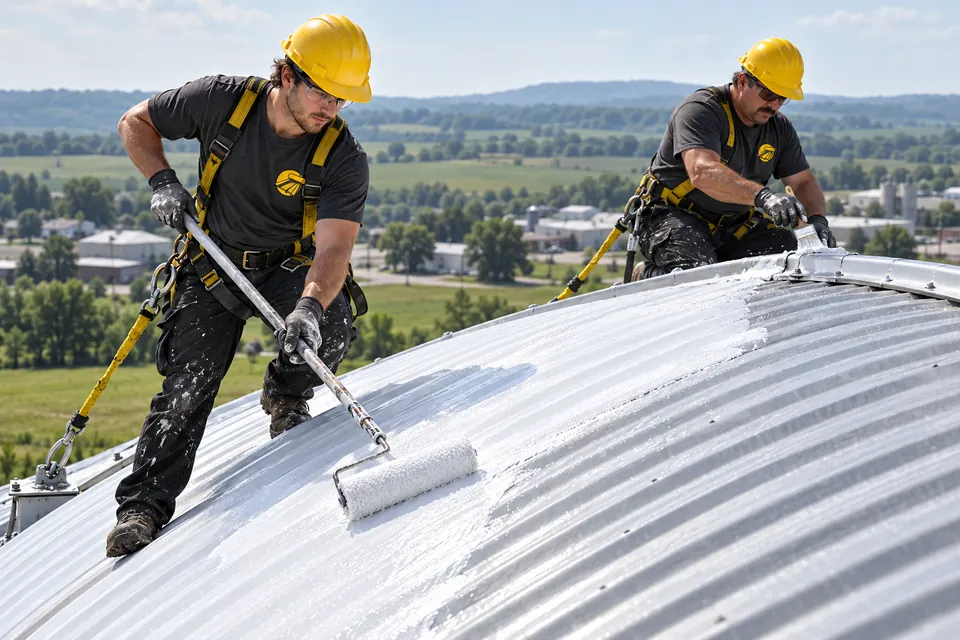
R-panel and standing seam steel with leaking screws, open laps, or surface rust gets repaired, primed, and coated over the whole field.

Five Coating Services ยท Winchester, KY
Our roof coating services in Winchester cover metal, silicone, acrylic, spray foam, and shingle roofs, each matched to a building after a full roof walk.
Pick the card closest to your roof. The walk confirms it, and many buildings use two.

R-panel and standing seam steel with leaking screws, open laps, or surface rust gets repaired, primed, and coated over the whole field.
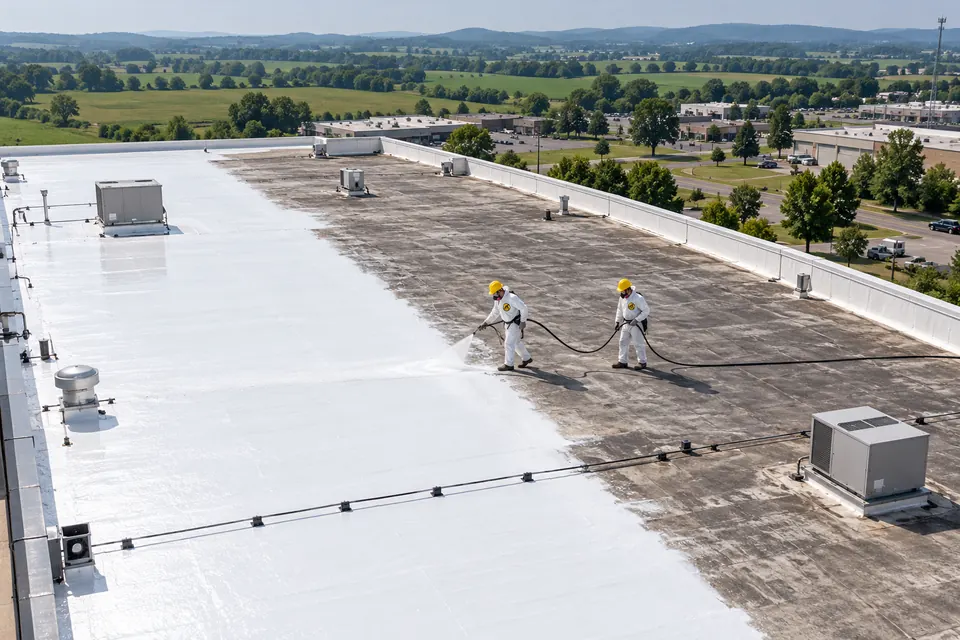
Pick silicone for low steel that holds water by gutters, valleys, or rooftop curbs, once the cause of the ponding is fixed.

Acrylic belongs on sloped, sunny steel that drains within hours, where its light color and easy recoats pay off.

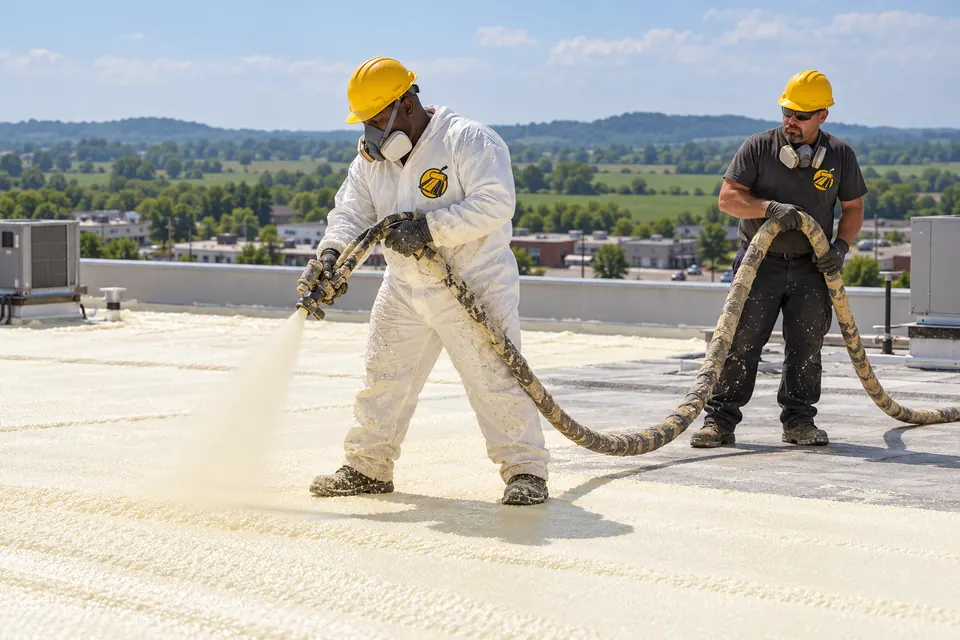
Closed-cell foam over the panels suits shops that drip condensation or lose heat, with a topcoat sprayed on before sunlight harms the foam.

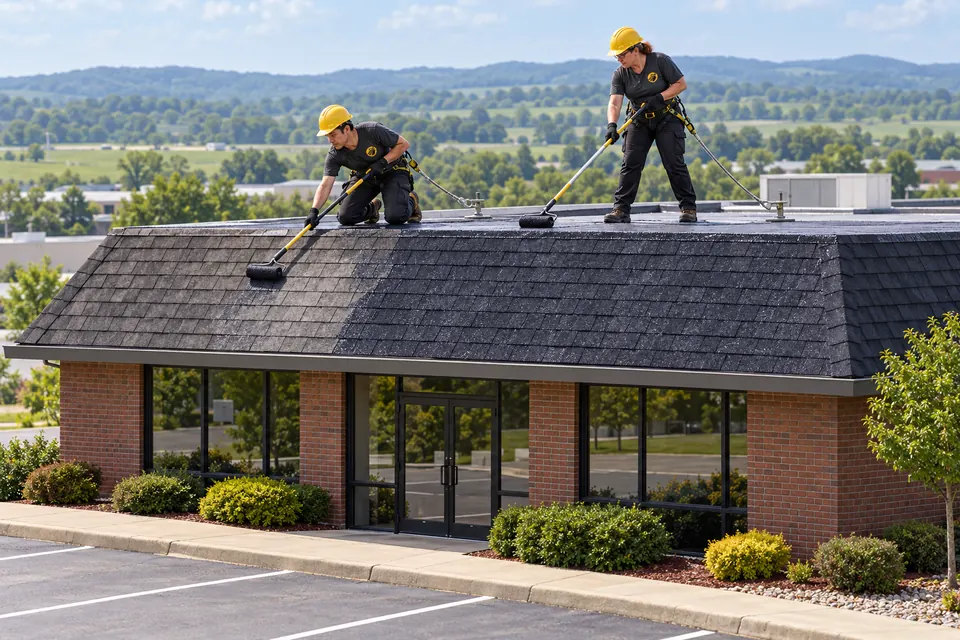
Strip centers, offices, and churches with flat, well-adhered shingles can be coated after the shingle maker's terms and the decking check out.
Read across a row to compare the five services on one roof detail.
| Factor | Metal Coating | Silicone | Acrylic | Spray Foam | Shingle Coating |
|---|---|---|---|---|---|
| Best roof | R-panel or standing seam | Low steel that ponds | Sloped, sunny steel | Steel needing insulation | Flat, well-adhered shingles |
| Standing water | Silicone or foam handles it | Handles it well | Breaks down if water sits | Can be shaped to add slope | Valleys checked first |
| Recoat later with | Same system as the first coat | Silicone only | Acrylic readily | Topcoat over firm, dry foam | Per the shingle maker's terms |
| Weather it needs | Per the coat chosen | Cooler, damper days work | Several dry, warm days | Calm wind, dry steel | Dry, mild days |
| Adds insulation | Very little | Very little | Very little | Yes, closed-cell foam | No |
| First repair | Screws, laps, rust | Cause of the ponding | Chalk and rust | Holed sheets, wet insulation | Vent boots, valleys |
Silicone and acrylic both need primer on some metal; an adhesion test shows where.
Water coming in somewhere you can point to? Call and tell us the room and what sits under the drip.
Call UsComparing systems for a building you manage? A ballpark range takes seven questions and a few minutes.
Get A Free Ballpark EstimateThe system changes from roof to roof. The order of work stays the same.
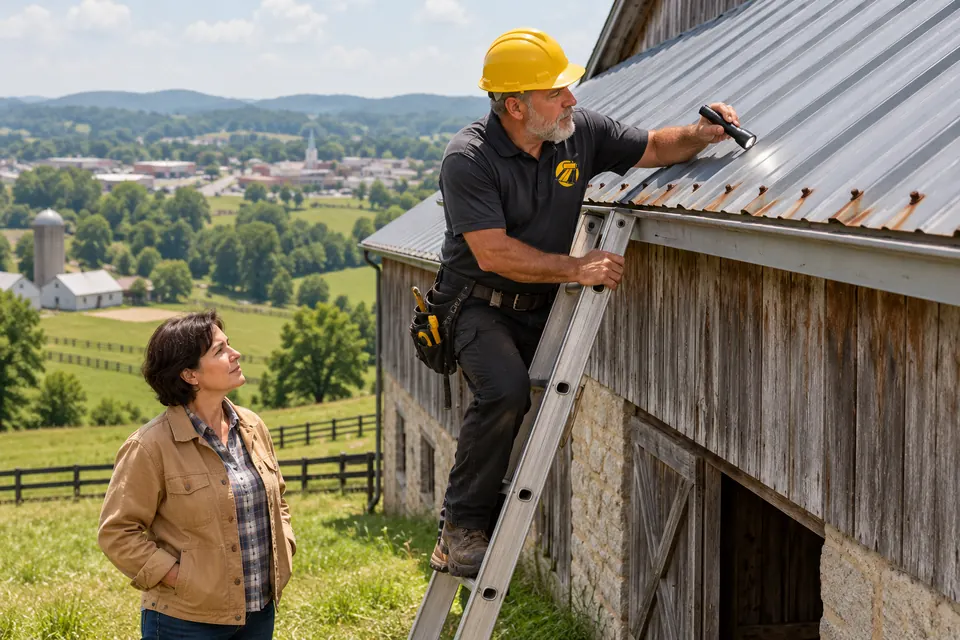
Every section gets walked and photographed, and the underside gets checked from inside the building for stains and drips.
Each part of the roof gets one of four calls: coat, restore, add new panels, or replace, with the reason written down.
Screws, laps, holed sheets, skylights, curbs, and gutters get repaired before any coating touches the field.
Primer goes where rust or chalk needs it, and reinforced coating seals laps, curbs, and flashings.
The chosen system goes on to its specified thickness, and a closing walk measures it.
A coating renews the weatherproof surface of the panels in place; a re-roof removes them or covers them with new steel or a membrane. The deck, trim, and framing stay in service under a coating.
Re-roofing makes more sense when panels are holed, purlins have moved, or old patches cover so much that the steel can no longer hold a screw.
Prep differs. Standing seam hides its fasteners in clips under the seams, so seam ends, pipe boots, and trim get the attention. R-panel puts screws through every sheet, so washers and laps come first.
Before coating standing seam, we confirm the seams can still slide as the panel maker intends.
Most shops, warehouses, and offices keep running, since crews stay on the roof and nothing gets torn off. Washing and screw replacement are the loudest days.
Plan for staging space for a lift, shielded rooftop intakes during spraying, covers on vehicles near the walls, and short pauses at doorways.
Steel condition decides it. Firm panels with light chalking get coated; leaks at screws and laps with surface rust get restored; holed sheets get new panels; failed purlins mean a new roof.
One building can land in two of these, like a coated main roof with new panels on a rusted lean-to.
IRS Publication 946 counts roofs among qualified real property improvements on existing nonresidential buildings, so roof work there can be expensed under Section 179, within the publication's yearly limits.
How each line item is treated is a question for your CPA. An itemized invoice separating repairs from coating helps.
Yes. A steep main roof can take acrylic while a low lean-to takes silicone, and a shingled front can be coated apart from a steel rear.
Each roof area gets the system that fits its slope and drainage.
Shingle and spray foam roofs are part of what we coat, along with metal. Commercial asphalt shingle roofs have to pass a narrow gate first, and foam goes over steel that needs insulation.
Every roof gets the same walk before a system is picked.
Get a ballpark range for coating, or call and describe the roof. The walk settles the system.
Or call (859) 204-8099
Leave a name and number and we will call you about the roof.
Rather talk now? Call (859) 204-8099