Hot, Faded Panels
Bare galvanized and faded painted steel soak up sun. A white acrylic coat reflects more of it, so the work space under the panels runs cooler.

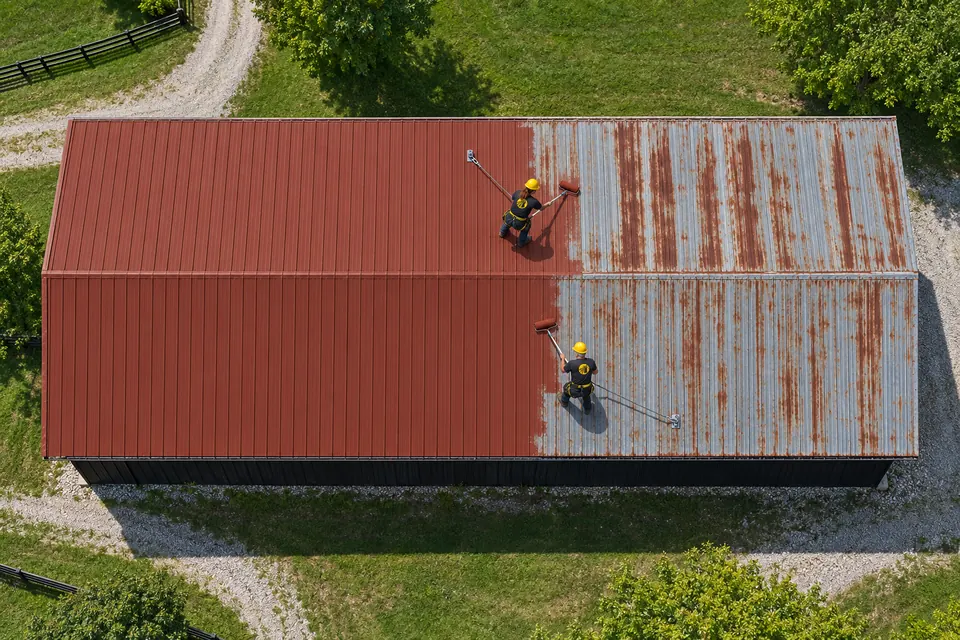
Sloped Steel In Full Sun
We apply acrylic roof coating in Winchester to well-drained metal roofs: a light, water-based coat that sheds dirt on a slope and takes acrylic recoats readily.
Acrylic does best where water leaves fast. Read your roof against each row.
| Check | Acrylic Fits | Fix First | Pick Silicone |
|---|---|---|---|
| Drainage | Water clears within hours | Debris dams in a few valleys | Water stands for days |
| Slope | Moderate to steep panels | Crushed ribs on one run | Very low runs that pond |
| Weather window | Several dry, warm days ahead | Dew holding the steel wet past midmorning | Late fall with frost on the panels |
| Old coating | Earlier acrylic, still bonded | Chalky or peeling areas | An existing silicone coat |
These are the conditions acrylic handles well once the prep is done.
Bare galvanized and faded painted steel soak up sun. A white acrylic coat reflects more of it, so the work space under the panels runs cooler.
Old paint that rubs off on a fingertip gets washed, and some roofs need a bonding primer before acrylic can grip.
A powdery film on galvanized panels comes off with a wash, then a galvanized-rated primer goes on before the first coat.
Water runs fast on steep steel and finds every tired washer on its way. Each head gets tightened and capped before coating.
Wind-driven rain gets under loose caps at the peak. Closures and stitch screws are checked and refastened first.
Skylight strips leak where they lap the steel. Intact panels get their laps sealed; cracked ones get replaced or covered.
Acrylic work on Winchester buildings usually follows one of these plans.
Rust and chalk get primed, screws get capped, and two or more acrylic passes build the specified thickness.
Fabric-reinforced acrylic bridges each side and end lap, so panel movement stretches a reinforced layer.
A building with a steep main roof and a low addition can take acrylic above and silicone where water sits.
Foam fills the ribs and adds insulation, then a coating goes over it to protect the foam from sunlight.
An acrylic coat on sloped steel changes something for the owner, the facility manager, and the people inside.
Seeing drips under the ridge or along a skylight strip? Call and tell us which slope it is on.
Call UsKnow the square footage of the slopes? Get a ballpark range for an acrylic coat before the dry season.
Get A Free Ballpark EstimateAcrylic dries by losing water, so the schedule follows a run of dry, warm forecasts.
We check chalk, rust, and drainage slope by slope, then look inside for stains so the leak points get mapped before prep.
A wash removes chalk and dirt. White rust gets a galvanized-rated primer and red rust gets brushed and a rust-inhibiting primer.
Every screw is tightened or replaced and capped, and laps get fabric-reinforced acrylic so movement stretches a reinforced layer.
Acrylic goes on when several warm, dry days line up, with each pass skinned over before the next and no rain in between.
A closing walk checks film thickness on each slope and looks again at the ridge, skylights, and gutters.
Steel roofs that need more than acrylic often take one of these.
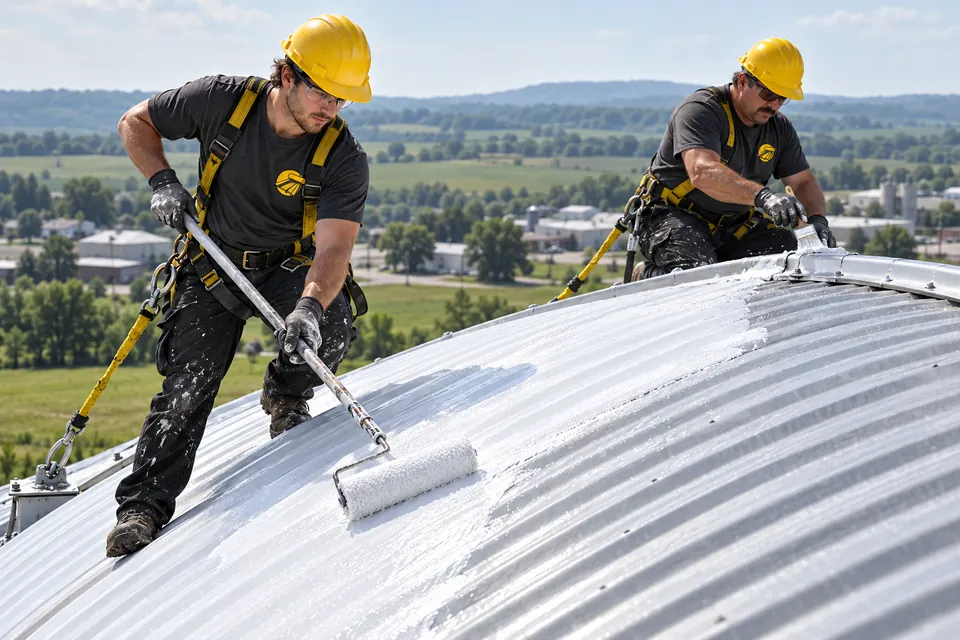
Screw, lap, and rust repair sets up any coat on steel.
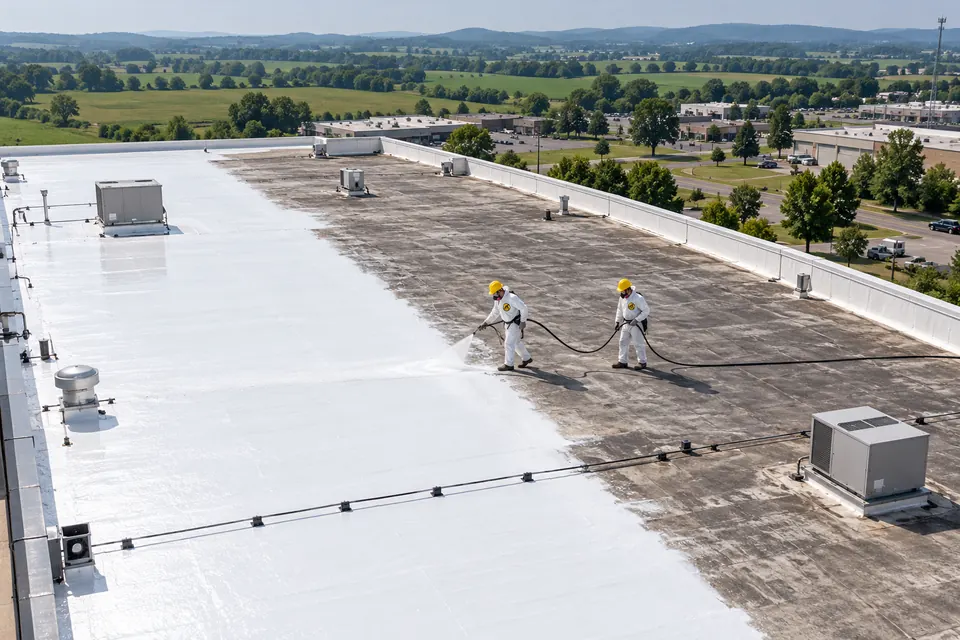
Low runs where water stands for days take silicone instead of acrylic.
Yes. A white or light coat reflects more sunlight than bare galvanized or faded painted steel, so the surface runs cooler and less heat passes into the space below.
The DOE Guide to Cool Roofs rates coolness by solar reflectance and thermal emittance. Uninsulated shops notice it most; product ratings sit in the Cool Roof Rating Council directory.
Most metal coating systems call for primer somewhere, because it lets the coat grip chalky, galvanized, or rusted steel. Chalky paint gets a wash and, on some roofs, a bonding primer.
An adhesion test patch shows what each area needs. Fastener lines, ridge caps, and end laps often get rust-inhibiting primer even when the field passes without it.
Sharp swings make steel panels grow and shrink, and that movement works on fasteners, laps, and old sealant. An elastomeric coating stretches with the steel where aged caulk cracks.
In January 2024 the Lexington station went from 7 below zero to the mid-60s within days. After a winter like that, walk the roof for split sealant and backed-out screws.
Acrylic stays cleaner than silicone on a slope, because rain rinses the dust that silicone tends to hold. A roof beside a gravel yard or grain handling will still pick up some dirt.
A gentle wash before a recoat brings the color back, and the reflectance with it.
Fabric embedded in acrylic at each lap gives the coat a reinforced layer where the panels move most. Daily heat cycles open and close laps, and plain coating alone can split there over time.
The fabric goes on after the lap is cleaned, dried, and stitched tight.
Answer a few roof questions for a ballpark acrylic range, or call and tell us about the slopes.
Or call (859) 204-8099
Leave a name and number and we will call you about the roof.
Rather talk now? Call (859) 204-8099