Metal Roof Coating
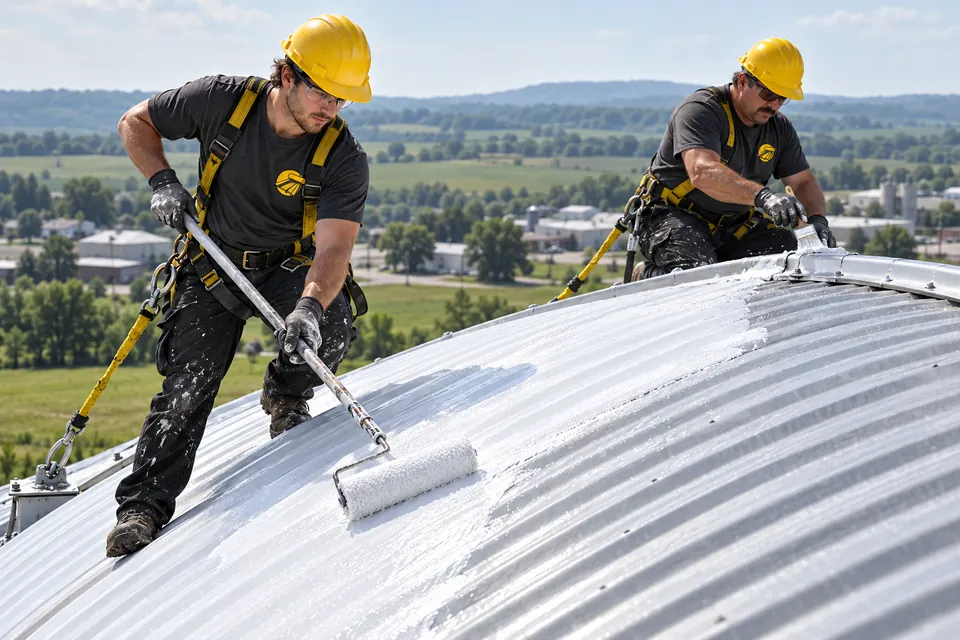
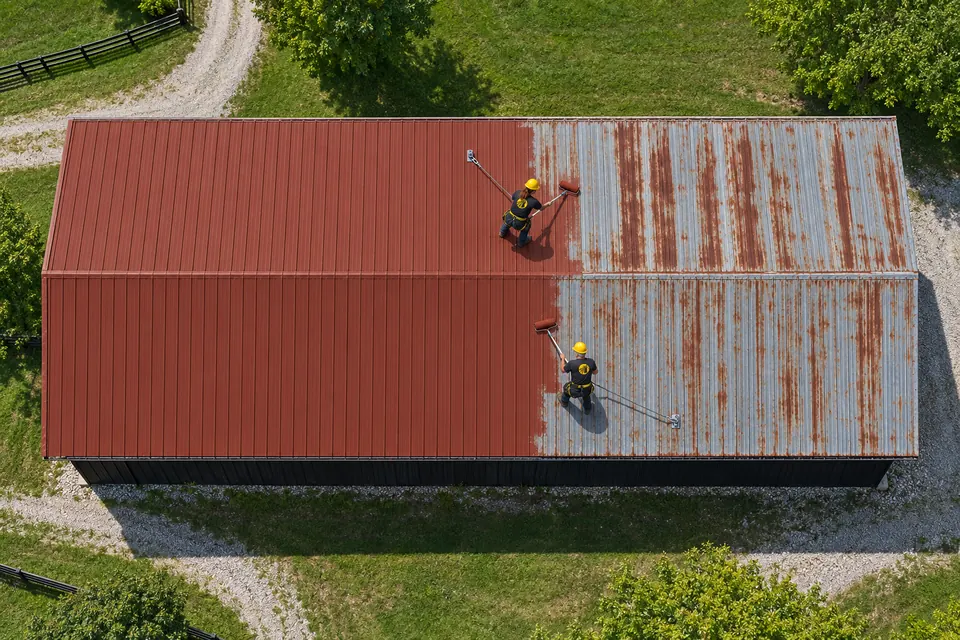
Exposed-fastener R-panel and standing seam roofs on warehouses, shops, and farm buildings get screw work, lap sealing, rust primer, and an elastomeric coat over the field.

Commercial Roof Coating · Clark County, KY
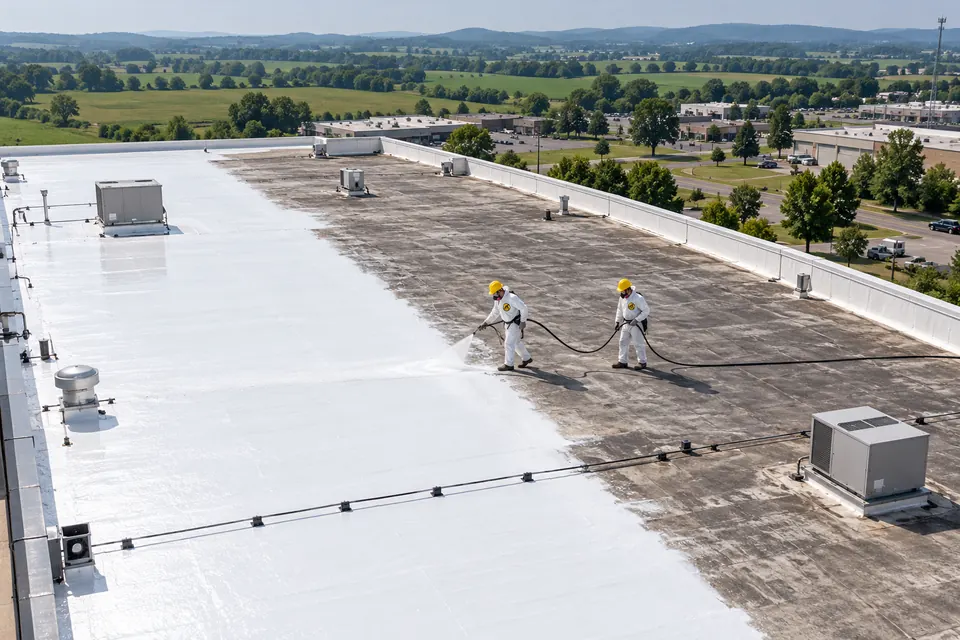
We coat commercial metal roofs in Winchester. Tired screws, open laps, and rust get fixed first, then the whole field gets an elastomeric coat.
Five coating services, each matched to a roof by its slope, drainage, and steel. Each card shows what we can do in winter and what waits for warm weather.

Exposed-fastener R-panel and standing seam roofs on warehouses, shops, and farm buildings get screw work, lap sealing, rust primer, and an elastomeric coat over the field.
Low metal roofs that hold water near gutters, curbs, or valleys take silicone, which tolerates standing water and cures with moisture from the air.

Well-drained, steeper steel in full sun suits acrylic, a water-based coat that stays cleaner on slopes and bonds readily to future acrylic recoats.

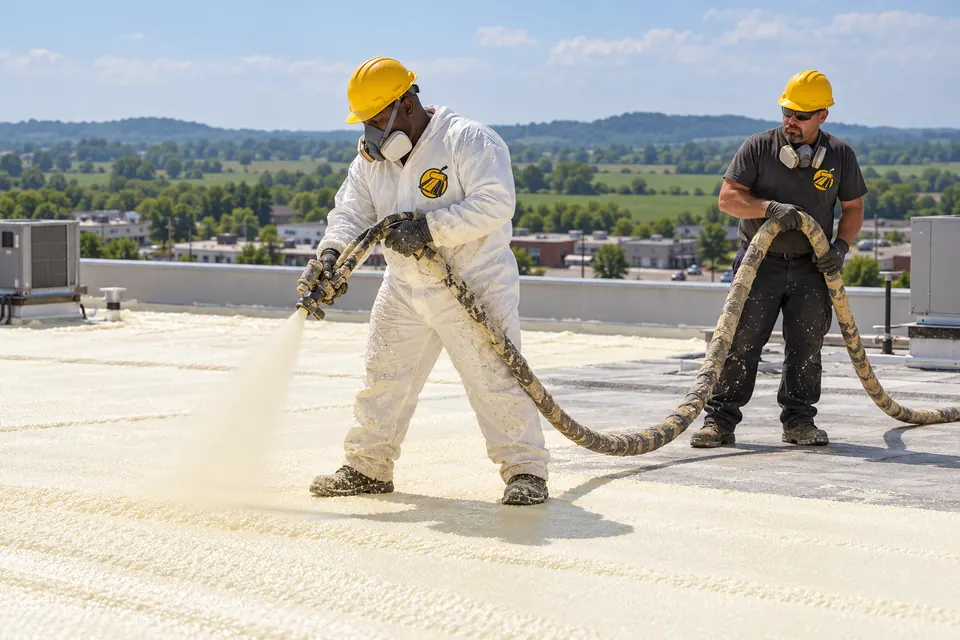
Steel buildings that drip condensation, lose heat, or trap debris in the ribs get closed-cell foam to fill the profile, then a protective topcoat.

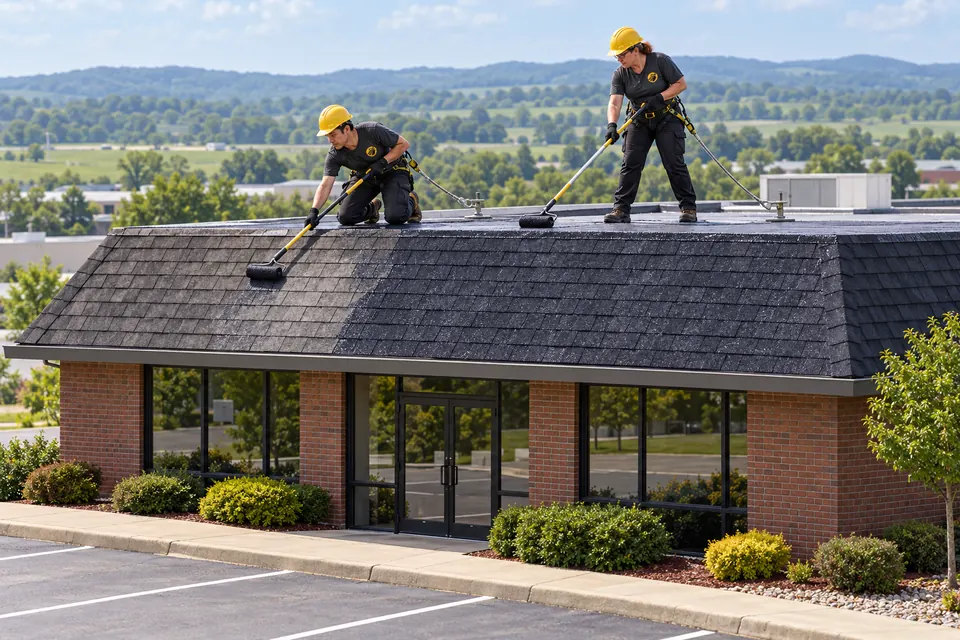
Commercial asphalt shingle roofs on strip centers, offices, and churches take a coating when the shingles lie flat, stay well adhered, and keep their granules.
The steel decides it. Read across each row to see where your roof sits today.
| What We Check | Ready To Coat | Repair First | Replace Instead |
|---|---|---|---|
| Panels underfoot | Firm when stepped on near the purlins | A few soft or dented sheets | Crushed ribs across whole bays |
| Rust | White rust or surface red rust | Scaled rust with pitting | Pinholes and open holes throughout |
| Screws and washers | Snug, washers still flexible | Backed-out screws, split washers | Stripped holes everywhere, steel too thin to hold |
| Side and end laps | Closed, old sealant still bonded | Open laps, missing stitch screws | Laps rusted through at the lower panel |
| Water on the roof | Sheds to the eaves within hours | Low spot behind a curb or by a gutter | A whole bay sags between frames |
Most Winchester roofs land in two columns at once: a coat over the main field with repairs at the laps and fasteners.
Every job starts on the roof and inside the building, and no stage starts until the one before it has cured.
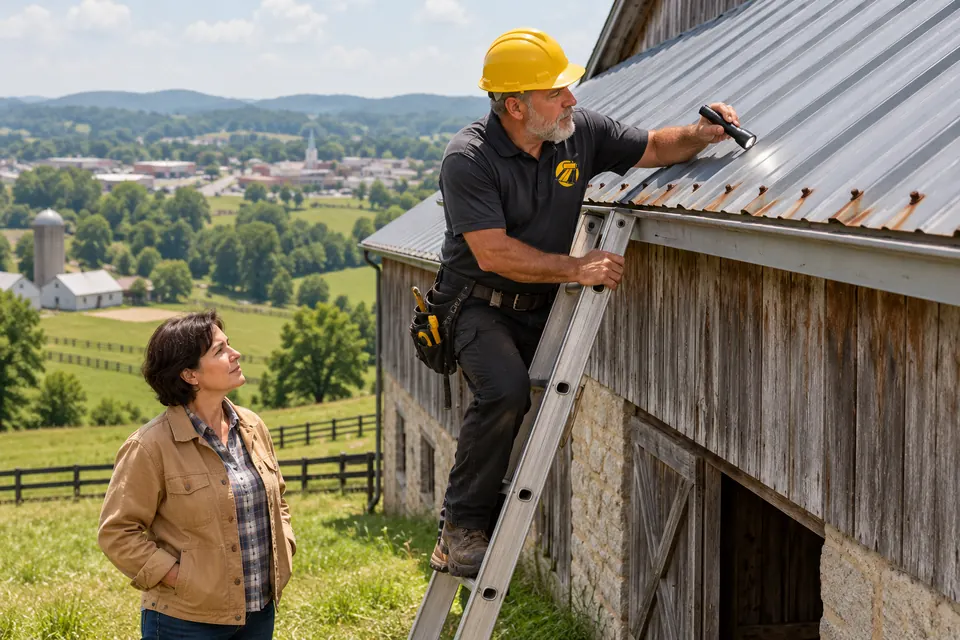
We walk the roof one panel at a time, then look at the underside from inside the building to match stains with the laps and screws above them.
Dirt, chalk, and loose rust come off with a wash. Loose screws are snugged or upsized, missing ones replaced, and holed panels patched or swapped.
Rusted or chalky steel gets primer. Laps, curbs, flashings, and every finished screw head get reinforced coating or compatible sealant.
The open field is coated in one or more passes until it reaches the thickness the manufacturer calls for, with each pass cured before the next.
A closing walk checks film thickness across the field and looks again at laps, curbs, and gutters before the lift leaves.
Water dripping at a screw line or a stain spreading on ceiling tile? Call and tell us where the drip lands inside.
Call UsKnow the roof size and the trouble spots? Answer seven short questions and get a ballpark range for coating it.
Get A Free Ballpark EstimateThese six conditions bring most building owners to us. Each one gets fixed before any coating goes on.
Neoprene washers harden, split, and let water track down the screw shank. Daily panel movement slowly backs screws out of the purlins, so a big R-panel roof can carry hundreds of leaking heads.
Grit and moisture collect under the upper panel on long, low-slope runs. Wind-driven rain then pulls water uphill between the sheets, and rust starts at the lower panel.
A powdery white film on galvanized steel washes off and takes a galvanized-rated primer. Orange bloom on firm steel gets wire brushed and primed before any coat.
Fiberglass panels yellow, crack, and leak at their laps. Cracked ones get replaced or covered, and intact ones get their laps sealed with the rest of the roof.
Standing water near rooftop units or gutters usually points to a sagging purlin, a crushed rib, or packed debris. We find the cause before choosing a coating.
Faded painted steel leaves a chalky residue on a fingertip. It gets washed, and some roofs need a bonding primer so the new coat grips.
A coated metal roof changes something for each person who owns, runs, or works in the building.
We take metal roof coating work in Winchester and ten towns nearby, all listed below. Building somewhere else? Call us or send us a message and we will tell you plainly.
7,558Residents · Montgomery County
Retail, office, and warehouse roofs with rooftop units whose curbs and vent boots get handled before the coat.
1,193Residents · Powell County
Shops and storefronts where a hail or wind warning is the cue to walk ribs, trim, and skylights.
1,708Residents · Montgomery County
Pole barns and equipment sheds whose firm steel can be coated without a new panel run.
2,093Residents · Nicholas County
Shops and storefronts where a fastener, lap, and coat scope keeps the job simple.
1,593Residents · Bath County
Downtown storefront roofs inside city limits and steel buildings out in the county.
601Residents · Menifee County
Metal buildings whose clouded or cracked skylight panels get replaced or sealed first.
365Residents · Bath County
Older shops where a sagging purlin or holed sheet gets fixed before any coating.
747Residents · Bourbon County
Steel roofs whose ridge cap lines, closures, and stitch screws need work before the field coat.
610Residents · Bourbon County
Metal buildings with service masts, meter bases, or weatherheads at the roof edge.
1,020Residents · Montgomery County
Metal shops and warehouses whose gutters, eave trim, and downspouts carry heavy rain.
Figures: 2020 U.S. Census counts for each city.

Most coatings for steel are elastomeric liquids, silicone or acrylic, that cure into a rubbery film thick enough to bridge small gaps at screws and laps.
That film stretches when the panels grow on a hot afternoon and pulls back overnight. Weak points get sealant or fabric-reinforced coating first, then the field is coated to the manufacturer's thickness.
Inspection comes first, then washing, repairs, priming, detail sealing at laps and curbs, the field coat, and a closing walk that checks film thickness.
Each stage waits for the last one to cure, which is why weather sets the calendar more than the crew does.
Square footage, repair volume, and the coating system set most of the price. Two roofs of equal size can land far apart when one needs hundreds of new fasteners and new skylight panels.
Eave height and lift access, rust repair, total film thickness, and detail work at curbs and gutters move the number too.
A rough roof age, the panel profile, and any past coatings or patches help most. Mark leak spots on a simple floor plan and snap photos of stains or rust on the underside.
Gate codes, lift space, work hours, and the electric provider's name save time too. Gaps are fine.
Someone walks the whole roof, checking every fastener line, lap, seam, skylight panel, gutter, and curb, then looks at the underside from inside.
Rust type, loose screws, open laps, ponding, and condensation stains all get noted. Each roof area is then sorted into coating, restoration, new panels, or a new roof, and you get a plain explanation.
Tell us the roof size and condition and get a ballpark range, or call and describe the leaks you see.
Or call (859) 204-8099
Leave a name and number and we will call you about the roof.
Rather talk now? Call (859) 204-8099